Daily relationship check-ins: the small habit that keeps marriages alive

By Paul Zohav M.Ed.  ·  Marriage and Communication  ·  Tucson, AZ

Most couples do not drift apart because of one big event. They drift apart through hundreds of small moments of not checking in. The fix is just as small and just as consistent.

Couple strengthening trust through daily relationship check-ins

In over 30 years of working with couples, the pattern I see most often is not dramatic. Two people who love each other stop reaching toward each other in the small moments. Not because they stopped caring. Because life got busy and the small daily gestures got quietly crowded out.

The relationship stops being something they tend to. It becomes something that runs in the background while other things take the front seat. And the background is exactly where relationships fade.

What a daily check-in actually is

A daily check-in is not a therapy session. It is not a performance review of the relationship. It is not an opportunity to raise every concern that has been building for the past week.

It is 15 minutes of deliberate, undistracted contact. You sit with each other. You ask how the other person is doing and you actually listen to the answer. You share something about your own day, your own feelings, your own inner world.

That is it. Simple, consistent, and more powerful than it sounds.

"Connection is not a grand gesture. It is a daily choice, made in the small moments."

Why consistency matters more than intensity

Most couples invest heavily in the relationship occasionally. A big anniversary trip. A long conversation after something goes wrong. An evening of real quality time after weeks of running past each other.

These moments matter. But they cannot substitute for the daily habit.

Think about it this way. You do not go to the gym once a month and expect to be fit. You do not eat well for one week and expect lasting health. Relationships work the same way. The connection you feel with your partner is built through repeated, small acts of attention over time. Not occasional large ones.

When couples stop checking in daily, assumptions fill the gap. You assume you know how your partner is feeling. You assume they are fine. You assume the distance is temporary. By the time the distance becomes impossible to ignore, months or years of small missed moments have accumulated into something that feels much harder to cross.

How to do a daily check-in well

In my book, Marriage and Communication: Recipes for Life, I describe what I call "the art of coming home." It is one of the most practical rituals couples can build. Here is the framework.

Step 1

Call or text as you leave work. This is not small talk. It is a signal. It tells your partner when to expect you and gives them a moment to transition toward your arrival rather than being pulled out of what they were doing.

Step 2

When you arrive home, pause. Take a breath. A 30-second hug before anything else. Hold on. This is not ceremonial. Research on physical touch shows that sustained physical contact releases oxytocin and begins to release the tension of the day. You are literally resetting your nervous system with that hug.

Step 3

Sit down and share. Not the logistics. Not the to-do list. Share at least three emotions you felt during the day and the story behind each one. "I felt frustrated this afternoon because..." or "I felt really proud when..." Emotions first, then the story. This is how two separate days become a shared experience.

Couple connecting through daily check-in conversation at home

What to avoid during a check-in

Keep phones out of reach. No notifications. No half-attention. A check-in with divided attention is not a check-in, it is a performance of one.

Do not turn the check-in into a problem-solving session. If something needs to be discussed, note it and give it its own time. The check-in is for connection, not resolution.

And do not skip it when you are tired. That is exactly when it matters most. Tired couples who skip the check-in and go straight to parallel tasks are the couples who wake up six months later wondering when they became strangers.

What couples who do this well discover

After a few weeks of consistent daily check-ins, most couples notice something unexpected. They start looking forward to it. The 15 minutes becomes the part of the day that feels most like coming home, not in the physical sense, but in the relational sense.

They also notice that the bigger conversations become easier. When you are checking in daily, concerns surface earlier and smaller. You do not have to build up the courage to raise something that has been festering for months. You raise it naturally, in the context of connection, before it becomes charged.

"A 15-minute daily check-in does not add to the relationship. It IS the relationship."

What if the check-in itself becomes difficult?

For some couples, sitting down to check in surfaces how disconnected they already feel. Silence where conversation should be. Awkwardness where ease used to live. If that is where you are, the check-in is still the right move. But you may need a structure to lean on.

Starting with a question can help. "What was the best part of your day?" or "What was the hardest moment?" or "Is there something you have been carrying that you haven't had a chance to say out loud?"

These questions do not require courage. They require only the willingness to ask and to listen with the intent to understand, not to fix.

If checking in regularly feels impossible because the distance has already grown too wide, that is what couples counseling is for. Paul works with couples at every stage, including couples who feel like they have forgotten how to talk to each other. A session with Paul is not about diagnosing what went wrong. It is about building the habits that make connection reliable again.

Couple reconnecting during daily relationship check-in at home

Start tonight

You do not need a plan. You do not need a script. You need 15 minutes and the intention to actually show up for each other.

Put the phones down. Sit together. Ask one real question. Listen to the answer. Then share something real in return.

Do that every day for two weeks and notice what changes.

The couples who feel most connected are not the ones with the best circumstances. They are the ones who kept showing up in the small moments, consistently, over time. That is a choice available to every couple, starting tonight.

Want to build a stronger connection?

Book a free 30-minute call with Paul Zohav M.Ed. No commitment. Just an honest conversation about where you are and what is possible.

Book your free call
Paul Zohav M.Ed.  ·  Marriage and Communication  ·  1901 N Julius Stra, Tucson, AZ 85712  ·  (520) 297-3085  ·  marriageandcommunication.com

The Importance of Daily Check-Ins: Preventing Emotional Drift in Long-Term Relationships

Why Relationships Fade Over Time

The relationships fade away very slowly and it is almost impossible to notice it. Daily relationship check-ins prevent emotional drift and help couples stay connected, which is the core focus of this guide. It does not happen overnight. It happens over a long period of time but in tiny spurts. Couples who don’t check-in often start to assume what’s going on in their partner’s hearts and minds which becomes dangerous for their relationship. Slowly the attention they used to give each other faded away. They just exist for each other. couples before daily check-ins

How Daily Check-Ins Strengthen a Relationship

This is where daily check-ins become helpful. It shows that you care for “us” and not just yourself. It shows that you are taking the effort to keep the relationship thriving rather than just surviving. What most couples do is that they make the effort once in a while and expect it to be there for weeks or months. It does not happen this way, you need to perform daily check-ins, else you are just taking your relationship for granted and it won’t last long. You put in small efforts everyday, small acts everyday, small gestures of love everyday, small communication everyday and so on. When all these accumulate, the relationship grows and thrives. There is ROI just like in the finances. couples during daily check-ins

Benefits of Regular Check-ins:

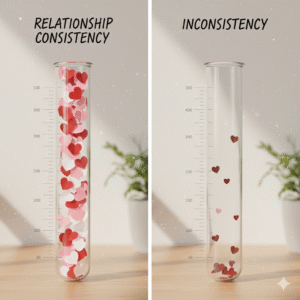
Regular check-ins do a lot of benefits to the couples in relationship or marriage. It’s one of the best forms of couple therapy. You create a consistency of acknowledgment. Your partner begins to feel seen and heard not just occasionally but on a daily basis. THIS CONSISTENCY IS SOMETHING THAT KEEPS THE RELATIONSHIP ALIVE AND THRIVING. It’s like going to the gym. You don’t go to the gym once in a month and expect a good physique. Also, you can’t go 10 days straight and expect a good physique. For couples who want deeper guidance, Paul offers personalized communication and relationship counseling sessions: Here is a link to Paul’s free 30 minutes coaching session: https://tidycal.com/marriage-and-communication/30-minute-meeting-1vxlwd7 consistency vs inconsistency in relationship

Why Consistency Matters More Than Occasional Effort

You go there everyday, even when you don’t see the results. You keep doing it because that’s the magic of compounding. Going to the gym for a long period of time gives you results. The same happens in a marriage or a relationship. Daily small check-ins seem no big deal to the couples but once it is done on a consistent basis without wanting to see the results after 10 or 20 days and just sticking to the habit does wonders. Here’s what most couples don’t understand. They think just because they love each other, the love will stay forever even without putting in the effort. The couples take love for granted. That’s where the love fades, the communication between the couples slows down and they eventually fall apart. It never happened in one day but it started from day 1. the compounding of daily habits in a relationship

How to Do a Daily Check-In (Step-by-Step)

Now that we have covered how regular check-ins can help couples become better life partners.

Choose a Fixed Time Daily

But, does it have to be a random check-in? Should it happen some days in the morning and some days in the evening? The answer is no! The couples have to be disciplined about it and do the regular check-ins at a mutually decided time. It can be just for 15 minutes before going to work. The couples, the communication and maybe their coffee. Nothing else: no distraction of work, no phone calls, no laptops, etc. Just the couples and their privacy. Now, how do these couples’ daily check-in sessions go?

Create a Calm, Distraction-Free Environment

The couples should sit down in a calming and relaxed environment and start by discussing what’s going on in both their minds and hearts. They should make each other comfortable so that the other can speak out about things they have been weighing on for long. Communication in couples saves relationships. It’s the lack of communication, where issues between couples start to happen. happy couples after regular daily check-ins

Questions Partners Can Ask Each Other

Either partner can ask the other partner questions like: Is there something that you have been holding on and have not been able to express lately? What is bringing you stress lately? Why don’t you smile often? Have I not been a good partner? What is something that’s been making you happy? What’s something that’s bothering you lately? And other questions like these.

What Check-Ins Should Not Become

This should not necessarily be a critique session where you complain about each other. Couples can also communicate what’s going well in their lives, what’s keeping them happy and joyful and so on. daily check-ins diary

About Paul Zohav

Paul Zohav is a relationship and communication coach specializing in marriage and family counseling. He helps couples build stronger connections through intentional communication practices. Paul Zohav on the benefits of couple's daily check-ins Book a clarity call with Paul today: https://tidycal.com/marriage-and-communication/30-minute-meeting-1vxlwd7
Your subscription could not be saved. Please try again.

Your subscription has been successful.

Newsletter

Subscribe to our newsletter and stay updated.